
Water Damage Prevention Focus: Multi-family Housing

With housing costs continuing to rise and housing shortages persisting in many markets, multi-family housing remains an important part of the residential landscape. Apartments, condominiums, townhomes, and senior living communities provide housing at a range of price points while offering amenities and shared spaces that can create a sense of community.
Newer multi-family properties may incorporate technology directly into residential units, including smart thermostats, lighting, locks, and other connected systems. Existing properties are also being renovated to meet changing tenant expectations, modernize amenities, and bring aging buildings up to current standards and codes.
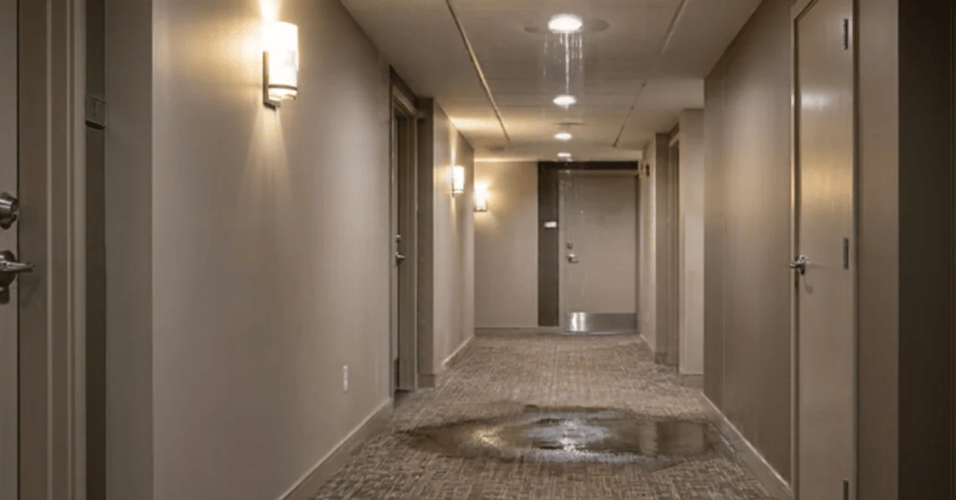
But multi-family housing presents a unique risk challenge. A single property can contain hundreds of individual units, multiple floors, shared mechanical systems, common areas, and extensive plumbing infrastructure. What starts as a relatively small water issue in one unit can quickly affect neighboring units, common areas, building systems, and residents.
That risk exists throughout the building lifecycle, from initial construction and renovation through occupancy and ongoing maintenance. Understanding where water damage can occur, and how quickly a loss can escalate, is an important part of protecting these properties.
What Makes Multi-family Housing Different
Multi-family properties are designed to provide the comforts and functionality of a single family home while concentrating many households within a single property or complex. Kitchens, bathrooms, laundry facilities, HVAC systems, and other features that would typically serve one household may be repeated dozens or hundreds of times throughout a multi-family property.
That concentration creates both operational and risk management challenges. A multi-family property may consist of a single high-rise building, multiple low-rise buildings, or a combination of structures. Regardless of the configuration, residents, contractors, property managers, and service providers are often interacting with the same interconnected infrastructure.
Usage also varies considerably. A senior living community has different needs than an apartment building primarily occupied by college students or young professionals. Some residents may require additional assistance, while others may be away from their units for extended periods.
The result is a property with many different sources of water exposure operating simultaneously. A washing machine, dishwasher, toilet, bathtub, or supply line may be an isolated risk in a single family home. In a multi-family setting, those same exposures can exist hundreds of times throughout a property, while the building's shared plumbing and mechanical systems introduce additional opportunities for a loss.
Risks Across The Building Lifecycle
Construction
Multi-family construction projects can involve multiple floors, buildings, and phases of development, creating a number of logistical challenges. Storage space can be at a premium, particularly in urban environments, and laydown yards may be located away from the actual construction site. Materials may need to be transported multiple times before they are installed, increasing the potential for damage, incorrect deliveries, or delays. Sourcing delays can also cascade throughout a project when materials or equipment are needed to complete work in sequence.
Water-related risks increase as interconnected systems are installed. Bathrooms, kitchens, laundry rooms and centers, appliances, HVAC systems, and sprinkler systems all introduce water into the building. A leak on an upper floor can quickly affect units and finishes below it, while remediation may require water to be shut off to an entire portion of the building.
When multiple buildings are being constructed as part of one development, the project may be phased so an owner can begin leasing completed buildings while construction continues elsewhere. While this can help accelerate revenue generation, it also creates additional coordination challenges. Contractors and workers may move from building to building, and lessons learned or installation issues discovered in one structure may need to be addressed in others.
As construction progresses toward completion, the potential cost of a water event also increases. Early in the project, a leak may primarily damage drywall or unfinished materials. Later, the same event could affect custom millwork, decorative ceilings, flooring, cabinetry, appliances, and other high-end finishes. The closer a building gets to completion, the more expensive a water loss can become.
Renovation
Renovating an existing multi-family property presents a different set of challenges. With the average age of U.S. apartment buildings at 45 years old, owners are investing in renovations to modernize properties and meet changing tenant expectations while updating to new building code requirements. Updating bathrooms, kitchens, laundry facilities, plumbing, and other building systems can introduce new water-related risks. Water pressure changes, damaged connections, or improperly installed components can lead to leaks, while disturbing older pipes can compromise connections that may have been in place for decades.
For properties with multiple buildings, renovations are often completed in phases. While this approach can minimize disruption, it can also extend the period during which construction activity and water-related risks are present across the property. Renovations also become more complicated when residents remain in place. Replacing bathroom or kitchen fixtures, modifying plumbing, or accessing water lines requires contractors to work around residents and their belongings. The goal is to minimize disruption without damaging the property or occupants' possessions.
Office-to-apartment conversions are another growing area of multi-family development as owners and developers look to repurpose vacant commercial space to address housing demand. At the start of of 2026, projects in the pipeline increased 28% year over year, according to a March 24 report by RentCafe. These projects face many of the same challenges as renovations, particularly when adapting existing plumbing, mechanical, and building systems to residential use. For more on the risks associated with these projects, read our Renovation Risk article.
When a loss does occur, the consequences can range from shutting off water to a portion of the building and performing cleanup to damaging personal property or temporarily relocating residents while remediation takes place.
Occupancy
Once a multi-family property is occupied, the source of water risk changes again. Maintenance responsibilities can be divided between property management and residents, particularly in condominiums, townhomes, and some apartment communities. A maintenance issue inside one unit may not remain isolated if it affects shared walls, floors, ceilings, or plumbing systems.
Human activity is another significant source of water-related risk. Clogged sinks or toilets, overflowing bathtubs, and leaking washing machines can create a water event that quickly escalates from one unit to another. In buildings with multiple floors, water can travel through walls, ceilings, and utility spaces, turning what began as a relatively small issue into an extensive remediation project.
Problems can occur when a unit is vacant. A slow leak may continue for days or weeks without anyone noticing. Without an occupant regularly present, water can accumulate until it causes significant damage to flooring, drywall, cabinetry, or other building components.
This combination—high occupancy in some units and extended vacancy in others—means property managers cannot always rely on someone being present to identify a developing water problem.
Understanding The Real Impact Of Water Damage
The cost of a water loss extends well beyond the price of repairing the damaged pipe, replacing drywall, or drying out a floor. In multi-family properties, the interconnected nature of the building means a single event can affect residents, revenue, operations, technology, and the property's reputation.
- Lost Revenue: Leasing and sales may occur months before a unit is ready for occupancy. When construction delays or water damage push back completion, owners can lose expected revenue while also facing frustrated prospective residents and, in some circumstances, contractual or legal disputes.
- Displaced Residents: Even when a property is otherwise fully operational, a water loss can force residents to temporarily leave their units while remediation takes place. Depending on the severity and location of the damage, residents may need to be relocated for days or weeks.
- Damaged Property: Water can affect both private units and shared spaces, including lobbies, lounges, game rooms, coworking spaces, laundry facilities, and other amenities. Damage to residents' personal belongings can further complicate the response and recovery process.
- High Repair Costs: Shared walls, floors, ceilings, insulation, and common infrastructure can allow damage to spread beyond the original source. Repair costs can become particularly significant when water reaches custom finishes, cabinetry, flooring, appliances, or other materials selected specifically for the property.
- Technology and Infrastructure Losses: Modern multi-family properties increasingly rely on connected technology, including Wi-Fi networks, smart locks, lighting controls, thermostats, speakers, security systems, and other building technology. Water damage can require costly replacement of these systems and temporarily eliminate features residents rely on.
- Health and Safety Concerns: Water events can create slip, trip, and fall hazards while also contributing to mold growth if moisture is not addressed quickly. During construction, standing water can create additional hazards for workers and visitors. After occupancy, those risks extend to residents, employees, contractors, and even members of the public in or around the property.
- Reputational and Legal Risks: Residents expect their homes to be safe, habitable, and properly maintained. While many water events are emergencies that cannot be predicted, recurring or preventable issues can affect resident satisfaction and create additional concerns for property owners and managers. A significant loss—or a pattern of repeated losses—can also affect how a property is perceived by current and prospective residents.
The common thread across these consequences is time. The longer water goes undetected, the more opportunity it has to spread and the more difficult and expensive the response becomes. For multi-family properties, early detection can be especially valuable because the source of a loss may be located several floors or units away from where the damage ultimately appears.
Protection With IoT Technology
Technology can provide property owners, managers, contractors, and risk professionals with another layer of protection by identifying developing water conditions and providing visibility into areas that may otherwise go unchecked.
An effective solution does not necessarily require every device available. The right combination depends on the property's size, configuration, occupancy, plumbing infrastructure, risk profile, and lifecycle stage. A multi-family property under construction may require a different approach than an occupied apartment community or a property undergoing phased renovations. Several technologies can play a role in a comprehensive water damage prevention strategy:
- Water Detection Sensors: Puck, strip, and probe-style sensors can be placed in areas where water is most likely to accumulate or where an early indication of a leak is valuable. They can be deployed in mechanical rooms, kitchens, bathrooms, laundry areas, near appliances, or other higher-risk locations. Depending on the property and lifecycle stage, sensors can be left in place, relocated as conditions change, or removed when they are no longer needed.
- Water Flow Meters: Flow monitoring provides visibility into how much water is moving through a system and can help identify unusual or unexpected activity. Monitoring water use can be particularly valuable in multi-family properties, where a continuous or abnormal flow condition may indicate a leak that has not yet become visible. They can also be used for sub-metering for specific floors or units.
- Water Shutoff Valves: When paired with monitoring technology, automated shutoff valves can provide a way to respond to certain water events quickly. Rather than relying solely on someone to discover a leak and manually locate and close a valve, an automated system can help limit the amount of water released.
- Humidity Sensors: Elevated humidity can provide an early indication of developing moisture conditions, particularly in enclosed areas where a leak may not be immediately visible. Monitoring humidity can also help identify conditions that could contribute to mold growth or other moisture-related problems.
- Temperature Sensors: Temperature monitoring can provide another layer of protection, particularly in areas vulnerable to freezing conditions. A significant drop in temperature can provide an early warning of conditions that may put pipes and other water systems at risk.
The value of these technologies increases when they work together. A sensor can identify the presence of water, a flow meter can provide context about what is happening within the plumbing system, and a shutoff valve can help limit the flow when action is required. Temperature and humidity data can provide additional insight into environmental conditions that may contribute to a loss.
For multi-family properties, that information can also help property managers move from a reactive response to a more proactive approach. Instead of waiting for a resident to discover water on the floor or for damage to become visible, teams can receive information about developing conditions and take action earlier.
Innovation Through Prevention
IoT technology is most valuable when it becomes part of a broader prevention strategy rather than functioning as a standalone collection of devices. For property owners and managers, that can mean using data from the technology to identify recurring issues, establish recommended maintenance schedules, and determine where additional inspections may be appropriate. Routine inspections can be particularly valuable during tenant turnover, when units are vacant, or when construction and renovation work is taking place.
Technology can also support better communication and training. Property management teams and residents can be educated on the most common sources of water damage and what to do when an alert or potential problem is identified. The faster the right person understands what is happening and takes action, the greater the opportunity to limit the resulting damage.
There may also be benefits from an insurance perspective. Better visibility into risk, combined with documented prevention and response practices, can give insurers greater insight into how a property is being managed. Over time, this type of risk information can help support stronger insurance programs and more informed conversations between property owners, brokers, carriers, and risk-management teams.
Ultimately, prevention is not about eliminating every possible water event. That is unrealistic. It is about identifying problems earlier, limiting the amount of water involved, and reducing the potential impact on the building, its residents, and its financial performance.
Conclusion
Multi-family properties bring together many of the characteristics that make water damage particularly challenging: repeated plumbing fixtures and appliances, interconnected building systems, multiple floors or structures, shared spaces, occupied and vacant units, and residents with different needs.
Those characteristics also create an opportunity for a more proactive approach to risk. From construction and renovation through ongoing occupancy, understanding where water losses are most likely to occur can help property owners and managers put the right controls in place. IoT technology can provide another layer of visibility, helping identify developing problems, respond more quickly, and limit the potential severity of a loss.
As multi-family properties continue to evolve, prevention will become an increasingly important part of protecting not only the physical building, but also the people, operations, revenue, and resident experience that depend on it.